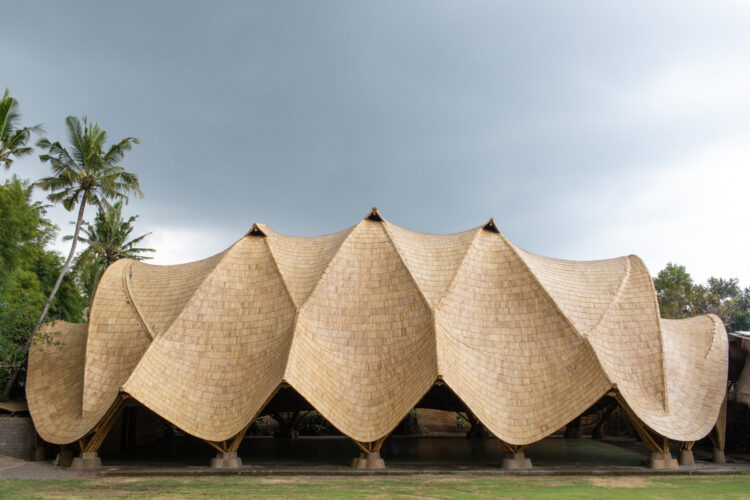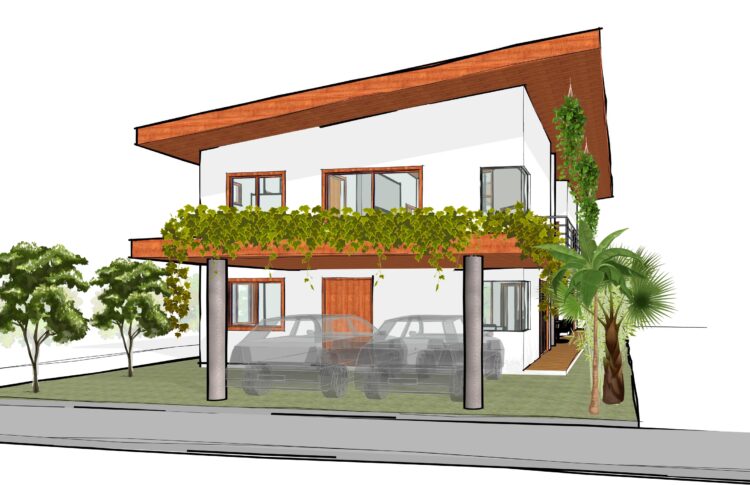
Hi there! Happy New Year! How is it going? I hope all is going well with you. Today I’ve got a couple of sincere questions for you.
Is our Contemporary lifestyle in harmony with nature, or is it just draining it?
Many think that money and technology only define abundance. Some people, however, believe that Nature is also ‘abundance’!
In an era marked by climate change, social fragmentation, and economic uncertainty, many people are looking for alternative ways of living—ways that nurture both people and the planet. Ecovillages represent one of the most inspiring and intentional responses to this search: self-organized communities designed to live sustainably, share resources, and harmonize human presence with natural systems. From deserts to forests, islands to mountain valleys, ecovillages are sprouting across the globe, each with its unique culture, governance, and identity—but all united by core principles of ecological stewardship, social cooperation, and economic resilience.
So, what could we, as an organised society, learn from them?
What Is an Ecovillage?
At their core, ecovillages are intentional communities that strive for ecological sustainability, social justice, cultural diversity, and economic viability. They are not just physical places, but living experiments in community design, land stewardship, and collective decision-making. While the term “ecovillage” can encompass a broad range of communities, they generally share these common elements:
-
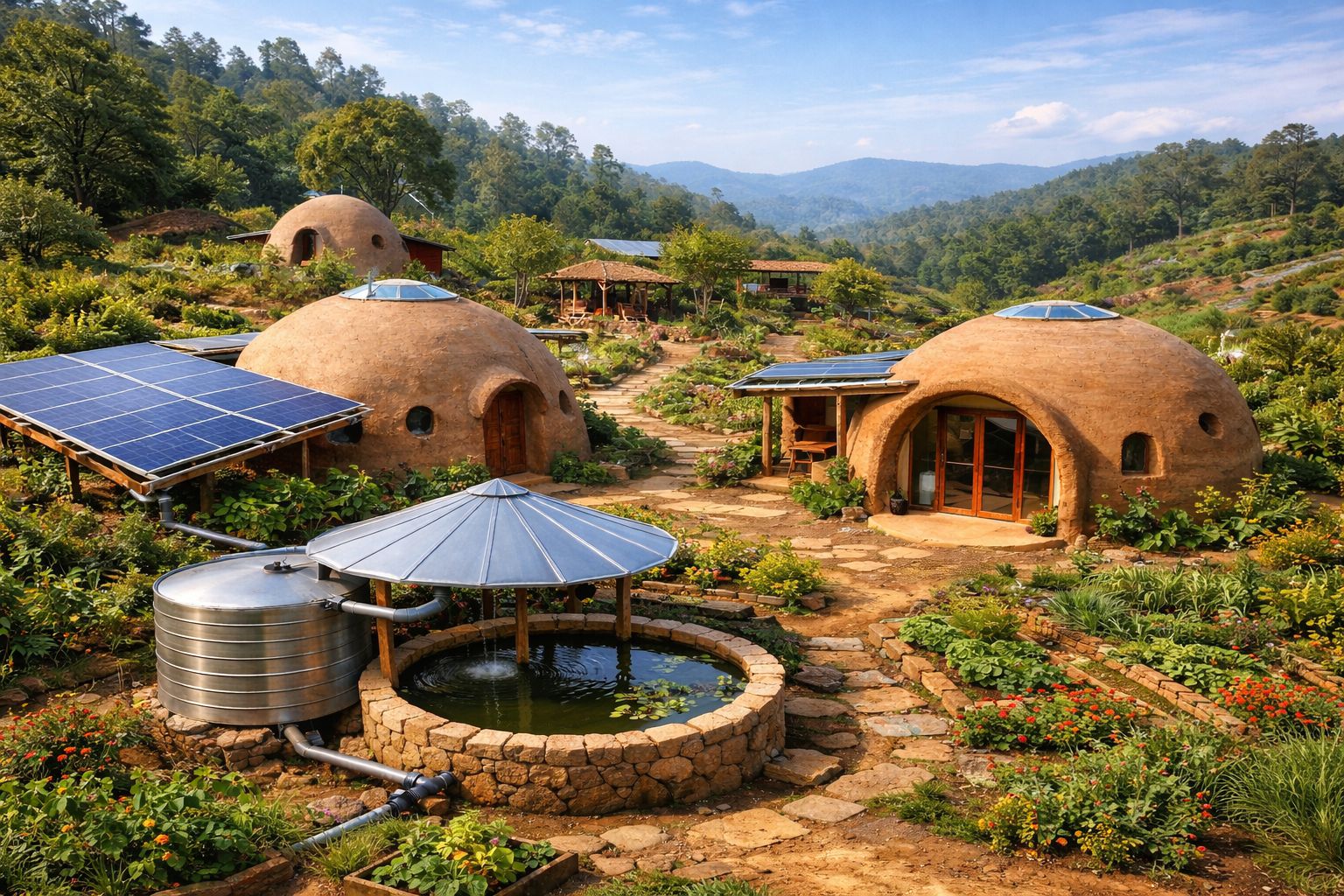
Bioclimatic design: Construction and land use that work with nature rather than against it.
-
Renewable energy: Solar, wind, micro-hydro, and other renewables power homes and shared facilities.
-
Sustainable food systems: Emphasis on organic farming, permaculture, community gardens, and local food networks.
-
Collective governance: Consensus decision-making, sociocracy, or other cooperative processes.
-
Shared economy: Cooperative enterprises, time banks, and resource-sharing reduce consumption and strengthen social bonds.
Ecovillages range from a few dozen residents to several hundred, some loosely networked, others highly structured. Regardless of size or ideology, what unites them is a vision of living in balance—human with environment, individual with collective, present with future generations.
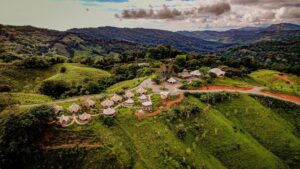
Ecovillage HOLOS in Costa Rica. Source: https://holos.global/the-venue
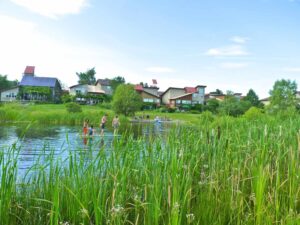
EcoVillage at Ithaca Inc in New York, USA. Source: https://constructive-voices.com/the-best-eco-villages-in-the-world/
Why Ecovillages Matter Now
Today, humanity faces unprecedented environmental challenges—rising greenhouse gas emissions, biodiversity loss, soil degradation, water scarcity, and social inequalities. Traditional systems of urban development and industrial production have contributed heavily to these problems. In contrast, ecovillages offer practical, small-scale models that demonstrate how communities can function in regenerative ways:
-
Reducing carbon footprints: Through renewable energy, shared transport, and energy-efficient construction.
-
Enhancing biodiversity: Through reforestation, agroecology, and habitat restoration.
-
Strengthening resilience: Local food production and diversified income sources shield communities from external shocks.
-
Reviving culture and connection: Close-knit social systems build mutual support and well-being, often missing in mainstream society.
Rather than waiting for large institutions to act, ecovillages show that change can start with people working together on the ground, creating tangible alternatives that others can learn from and adopt.
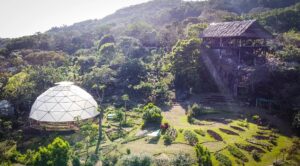
Ecovillage Florestral in Costa Rica. Source: https://www.ecovillagetours.com/costa-rica
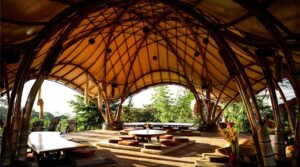
Ecovillage HOLOS in Costa Rica. Source: https://www.ecovillagetours.com/costa-rica
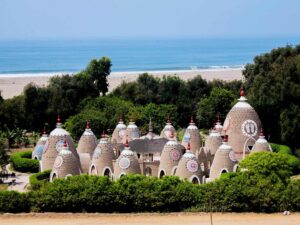
Eco Truly Park in Peru. Source: https://constructive-voices.com/the-best-eco-villages-in-the-world/
Ecovillages in Action: Inspiring Examples Around the Globe
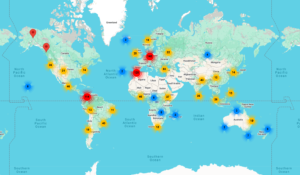
Location of some of the main Ecovillages around the world. Source: https://ecovillage.org/ecovillages/map/
While each ecovillage is unique, several communities have gained international attention for what they are accomplishing. Below are a few noteworthy examples:
1. Findhorn Ecovillage — Scotland
Findhorn, located on the scenic northeast coast of Scotland, is one of the oldest and most well-known ecovillages in the world. Founded in the 1960s, it has become a hub for spiritual ecology, sustainable building, and ecological research. Residents and visitors alike engage in organic gardening, renewable energy projects, and workshops on community governance and personal growth.
Findhorn’s successes include:
- Community-based, environmentally friendly design principles
- Partnerships with academic and environmental institutions
- An international reputation for innovation in sustainable living
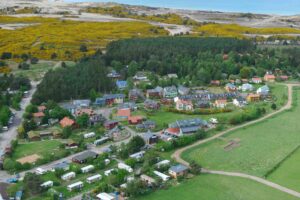
Aerial view of the Findhorn Ecovillage in Scotland. Source: https://nararaecovillage.com/2017/12/natural-building-group-talk-on-findhorn/
2. Tamera — Portugal
Tamera is a community in southern Portugal envisioned as a “healing biotope” where humans and nature can thrive together. It focuses on water ecology, permaculture, and regenerative social structures. Over the decades, Tamera has developed extensive wetlands restoration projects and built international networks focused on peace research and sustainable culture.
Key elements include:
- Landscape regeneration and water retention systems
- Cooperative housing and shared economic enterprises
- Educational programs on ecological healing and peacebuilding

Tamera Ecovillage in Portugal. Source: https://ideas.ted.com/is-this-portuguese-eco-village-a-21st-century-utopia/
3. Auroville — India
Auroville, in southern India, is perhaps the most ambitious ecovillage-like project in the world. Founded in 1968 as an experimental township, it spans thousands of acres and aims to be a universal human community where people from all nations live in harmony. Auroville combines advanced sustainable technologies with diverse cultural practices, focusing on organic agriculture, renewable energy, and community-oriented economic systems.
Auroville’s ongoing work includes:
- Large-scale reforestation and land regeneration
- Solar and biogas energy systems
- Artisan enterprises, research institutes, and education centers

Auroville in South India. Source: https://auroville.org/page/the-matrimandir-gardens
Please don’t miss one of our most popular Blog Posts on Auroville, ‘The Matrimandir‘.
4. Damanhur — Italy
Nestled in the foothills of the Italian Alps, Damanhur is a federation of villages known for its cultural richness and cooperative economic structures. While it is sometimes described as a spiritual community, it is equally grounded in ecological and technological innovation—featuring bio-architectural design, sustainable agriculture, and community-run businesses.
Highlights include:
- A network of cooperative enterprises
- Ecological construction and renewable energy use
- Artistic expression and cultural festivals

The underground temples of Damanhur in Italy. Source: https://theplaidzebra.com/5-breathtaking-ecovillages-will-make-want-drop-everything-go-off-grid-right-now/
5. Cidade Zigurats – Brazil
Zigurats merges cutting-edge architecture, research, tourism, and experiential living in a unique environment that differs from typical urban or rural developments. With its rounded, geometrically-inspired residences and grand stepped buildings, the city is designed based on principles its creators indicate as aligning human existence with natural energies, incorporating sustainable water management, organic food cultivation, and adaptability to regional climate conditions.
The city also serves as a central hub for research and cultural exchange as part of the Dakila Pesquisas network. The community is home to a range of scientific and exploratory initiatives, including projects focused on sustainability, neurotechnology, and astronomy, featuring a technologically advanced observatory and plans for a striking 63-meter pyramidal monument intended to function as a center for education, meditation, tourism, and social gatherings.
Main interests:
- Sustainable living
- Spiritual Technology and Astronomy
- Tourism
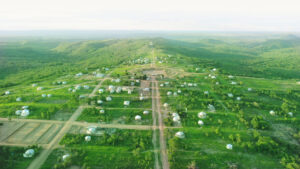
City of Zigurats, in Mato Grosso do Sul, Brazil. Source: https://cidadezigurats.com.br/
By the way, the Ecossistema Dakila has already been featured on our Blog, in the post about ‘The Stepped Monuments‘. Don’t miss it!
Ecovillages as Schools for the Future
Beyond the individual communities themselves, ecovillages serve as living laboratories. Researchers, students, policymakers, and ordinary citizens visit these communities to see sustainable systems in action. Many ecovillages offer workshops on permaculture, cooperative governance, renewable energy, and ecological restoration.
The Global Ecovillage Network (GEN) helps connect these communities, facilitates knowledge exchange, and supports the spread of ecovillage principles worldwide.
Challenges and Opportunities
Ecovillages are not without challenges. Issues like financial sustainability, internal conflict, diverse lifestyles and values, regulatory hurdles, and scalability can be difficult to navigate. However, many communities have developed creative solutions—collaborative businesses, inclusive governance models, and blended urban-rural networks that influence change beyond their borders.
Conclusion: A Future Worth Cultivating
Ecovillages remind us that another way of living is possible—one that values cooperation over competition, regeneration over extraction, and community over isolation. As climate impacts intensify and people crave deeper meaning and connection, the lessons from ecovillages are becoming ever more relevant. Whether as places to live, models to emulate, or catalysts for broader transformation, ecovillages represent hopeful beacons in a world ripe for innovation.
By the way, if you are keen, some businesses are taking people to visit those beautiful settlements around the world:
Important sources:
https://www.revistaea.org/artigo.php?idartigo=5147